
Introduction
The obligee concept trips up even experienced insurance agents — but fidelity bond obligees are a different animal than what most agents encounter day-to-day.
In standard surety bonds, the obligee is almost always a government agency or project owner standing outside the principal–surety relationship. With fidelity bonds, that assumption breaks down quickly. The obligee might be the business itself, a private client, a federally protected employee benefit plan, or a county probate court — depending entirely on which bond type you're placing.
According to the Surety & Fidelity Association of America, modern fidelity bonds are generally two-party insurance policies — not the three-party surety instruments most agents picture when they hear the word "obligee." That structural shift changes everything about how you identify and document the obligee on a fidelity bond form.
This guide covers the definition of a fidelity bond obligee, how it differs across bond types, and the practical steps agents need to take to get it right every time.
TLDR
- The fidelity bond obligee is the party protected by the bond, which is not always a government agency
- Modern commercial fidelity bonds often name the business itself or a private client as the obligee
- ERISA bonds name the employee benefit plan as the obligee — not the employer
- Probate bonds follow court-approved form language exactly
- Getting the obligee wrong creates coverage disputes at claims time
What Is a Fidelity Bond Obligee?
In any bond arrangement, the obligee is the party that requires or benefits from the bond. If a covered loss occurs, the obligee is the one entitled to make a claim and receive reimbursement.
Most agents learn this concept through surety bonds, where the obligee is typically a state agency, municipality, or project owner. Fidelity bonds work differently — and the obligee role shifts depending on who the bond is actually protecting.
The Three-Party Structure (and When It Simplifies)
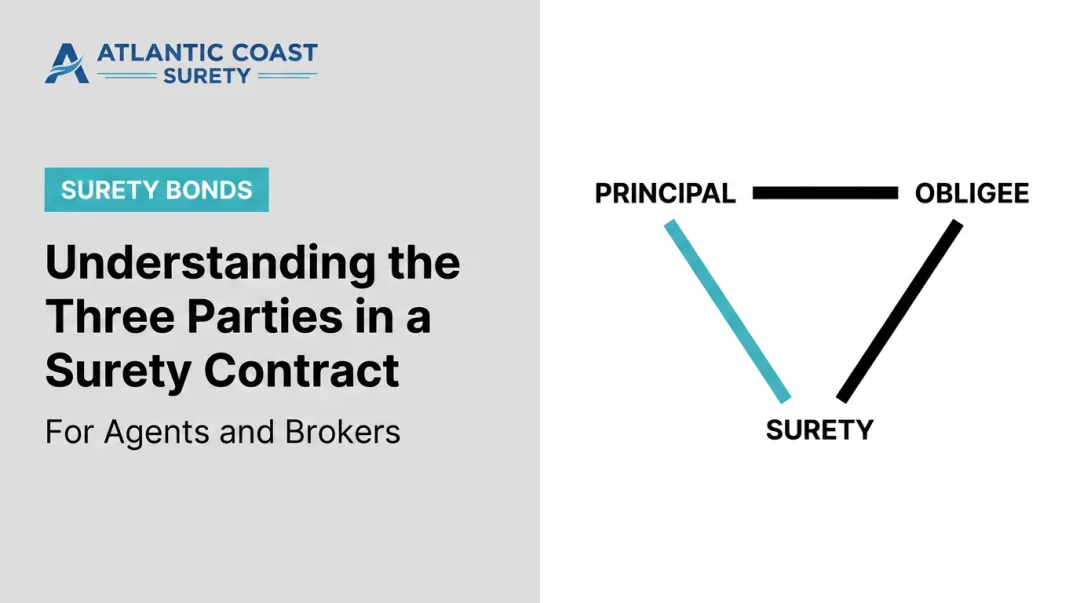
The classic bond structure involves three parties:
| Party | Role |
|---|---|
| Principal | The business whose employees or fiduciaries are covered |
| Surety | The bonding company that issues coverage and bears financial risk |
| Obligee | The party protected by the bond if a covered loss occurs |
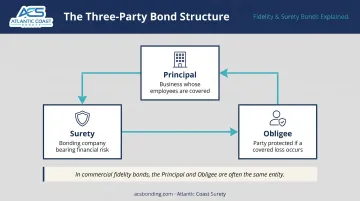
In traditional surety bonds, these three parties are always distinct. In commercial fidelity bonds, however, the structure often collapses. The SFAA confirms that modern fidelity bonds function as two-party insurance policies, meaning the business purchasing the bond and the protected party are often the same entity.
When a company buys a fidelity bond to protect itself from employee theft, it's simultaneously the principal and the obligee. When a client requires a service provider to carry a fidelity bond, the client steps into the obligee role instead.
The practical takeaway: the obligee is whoever the bond is legally designed to protect — and that answer changes depending on the bond type and the contractual relationship involved.
How the Fidelity Bond Obligee Differs From Surety Bond Obligees
Most agents who place surety bonds encounter fidelity bonds as a separate product category — and for good reason. The obligee role, the claims process, and the underwriting conversation all work differently. Conflating the two leads to client confusion and missed coverage gaps.
Risk Direction Is Opposite
- Surety bond obligees are protected against the principal's failure to perform a contractual or regulatory obligation — a contractor failing to complete a project, a licensee violating state law
- Fidelity bond obligees are protected against internal dishonesty — theft, fraud, or embezzlement committed by the principal's own employees or fiduciaries
The risk in a surety bond flows outward. The risk in a fidelity bond flows inward.
The Claims Process Works Differently
In a surety bond claim, the obligee files against the bond and the surety investigates. If the claim is valid, the surety pays — then seeks reimbursement from the principal through the indemnity agreement. The principal is ultimately on the hook.
Fidelity bond claims work more like insurance:
- The obligee (or the business acting as obligee) discovers and reports the loss
- The bonding company investigates and verifies the claim
- Reimbursement is paid — without requiring the business to repay the bonding company
- The bonding company may pursue the dishonest employee directly through subrogation rights
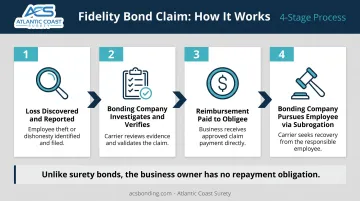
A business owner familiar with surety bonds may expect personal liability after a fidelity claim. They won't face it — but they do need to report losses promptly and cooperate fully with the insurer's investigation.
Underwriting Criteria Also Differ
Surety bond underwriting focuses on the principal's financial strength, credit history, and capacity to perform. Fidelity bond underwriting evaluates internal risk — employee access to funds, prior dishonesty losses, and internal control quality. These are entirely different underwriting conversations.
Who Is the Obligee in Each Type of Fidelity Bond?
This is where agents most often stumble. The obligee answer isn't universal — it changes by bond type.
Commercial / Employee Dishonesty Bonds
For standard commercial fidelity bonds — whether blanket (covering all employees under a single limit), position schedule (listing covered roles), or name schedule (listing specific individuals) — the obligee is usually the employer itself.
The business buys coverage to protect against financial loss from its own workforce. In this structure, the purchaser and the protected party are one and the same.
The dynamic shifts when a client requires a service provider to be bonded before doing business. A building owner that requires a cleaning company to carry a fidelity bond is the obligee. The cleaning company is the principal. This structure is common in industries like home healthcare, janitorial services, and similar businesses where employees enter client premises.
ERISA Fidelity Bonds
ERISA bonds follow a different rule, and the compliance stakes are federal.
Under ERISA Section 412 (29 U.S.C. § 1112), every person who handles assets of an employee benefit plan must be bonded. The obligee is the employee benefit plan itself — not the employer, the plan sponsor, or the trustee.
Key coverage requirements from the DOL:
- Minimum coverage: a statutory percentage of plan assets handled in the prior year
- Minimum bond amount: the applicable statutory minimum
- Standard maximum: the applicable statutory maximum
- Higher maximum for plans holding employer securities
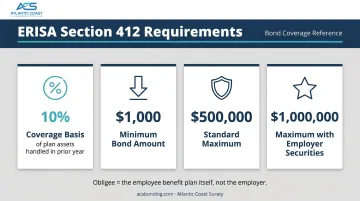
The practical implication for agents: the plan name — not the employer's company name — must appear on the bond form as the protected party. Atlantic Coast Surety's ERISA bond application includes a dedicated field for the "Name of Plan(s) to be Covered," separate from the Plan Sponsor information, precisely because this distinction matters.
Getting this wrong means the plan may not be able to recover losses, which creates a DOL compliance problem on top of a coverage gap.
Atlantic Coast Surety places ERISA bonds through NGM Insurance Company (and Spring Valley Mutual Insurance Company in Minnesota) with an inflation guard endorsement that automatically increases coverage as plan assets grow — but only if the correct minimum is purchased at inception.
Business Service Bonds
Business service bonds are a specialized fidelity product where the client of the service business is the obligee — not the business itself.
As NFP explains, a janitorial bond is a contract among the cleaning company, the bonding company, and the customers — giving customers direct recourse if a cleaning employee steals from their property. As the agent, your job is to confirm:
- Who the end client is
- Whether the service contract specifies bonding requirements
- Whether the bond needs to name a specific client or cover clients generally
Probate and Court-Ordered Fidelity Bonds
When a court appoints a fiduciary — an executor, trustee, guardian, or conservator — to manage estate assets, the bond required is a fiduciary bond with the court itself as the obligee.
The obligee language comes directly from court-approved forms and state statutes. Two common examples:
- Ohio: Probate bond forms bind the fiduciary to the State of Ohio
- Massachusetts: Uses its own prescribed Probate and Family Court Bond form (MPC 801)
Atlantic Coast Surety's probate bond application requires agents to submit complete court documents, the court and county where the bond will be filed, and the docket number. That documentation package is what determines the correct obligee name — not a generic template.
The Obligee's Rights in the Fidelity Bond Claims Process
When a covered loss occurs, the obligee has specific rights and responsibilities:
The obligee is entitled to:
- File a claim directly with the bonding company
- Receive reimbursement for documented financial losses caused by employee dishonesty
- Full cooperation from the insurer during the investigation
In return, the obligee must:
- Discover the loss and report it promptly within the bond's reporting period
- Document the financial harm with supporting evidence
- Cooperate with the bonding company's investigation
One critical advisory point for agents: delayed reporting is a common reason fidelity bond claims are denied. Bond forms specify notice and proof-of-loss deadlines — these aren't formalities. Advise clients upfront that as soon as they suspect a dishonesty loss, the clock starts.
One more distinction worth communicating to clients: unlike surety bonds, the business owner does not reimburse the bonding company after a fidelity claim is paid. The bonding company retains subrogation rights to pursue the dishonest employee directly — the employer is made whole without a repayment obligation.
How Insurance Agents Identify and Correctly Document the Obligee
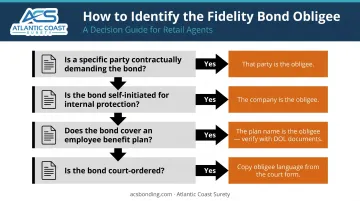
Follow this decision framework on every fidelity bond submission:
- Review the client's contract or licensing requirement. If a specific party is demanding the bond, that party is the obligee.
- If the bond is self-initiated for internal protection, the company is the obligee.
- If the bond covers an employee benefit plan, the plan name is the obligee — confirm the exact legal name as registered with the DOL.
- If the bond is court-ordered, copy the obligee language directly from the court form or order.
When the Obligee Is Unclear
Contact the party requiring the bond to confirm their full legal name and any bond form specifications. For ERISA bonds, verify the plan name matches what appears on plan documents — Atlantic Coast Surety's ERISA application captures this in a dedicated field.
Probate bonds follow a different path: Atlantic Coast Surety requires a complete copy of all court documents plus the bond form the court mandates. That documentation determines the obligee name directly.
Agents can reach Atlantic Coast Surety's specialists directly: Debra Ezra at (201) 661-2381, Karen Swistak at (201) 661-2369, or Lesia DiMaggio at (201) 661-2383. All three are available to help agents review bond structure questions before submission.
The Most Common Obligee Error
Using a generic or informal company name instead of the full legal entity name. For clients with multiple subsidiaries, this creates real coverage exposure — a claim filed against the wrong entity can be disputed.
Confirm these three details on every submission:
- Full legal name of the obligee (not a DBA or shorthand)
- Correct entity type (LLC, Inc., Trust, Plan)
- Proper spelling and punctuation matching official documents
Frequently Asked Questions
What is a bond obligee?
The obligee is the party who requires the bond and is financially protected if a covered loss occurs. In fidelity bonds, this is often the company itself, a private client, or an employee benefit plan — depending on the bond type and contractual relationship involved.
Who are the parties to a fidelity bond?
The three classic parties are the principal (the business whose employees are covered), the surety (the bonding company), and the obligee (the protected party). In many modern commercial fidelity bonds, the business acts as both buyer and protected party — functioning more like a two-party insurance agreement.
Who is the obligee on an ERISA fidelity bond?
The obligee on an ERISA bond is the employee benefit plan itself — not the employer or plan sponsor. Federal law under ERISA Section 412 requires coverage equal to at least the applicable statutory percentage of plan assets handled, and the plan must be specifically named so it can recover losses.
Can the obligee on a fidelity bond change mid-term?
Yes, if a client relationship ends or a new client requires coverage, agents may need to rewrite or endorse the bond to reflect the new obligee. Atlantic Coast Surety handles bond modifications through an Addendum/Rider Request form — agents should contact the team to confirm whether a change requires endorsement or full reissuance.
What rights does an obligee have when filing a fidelity bond claim?
The obligee can report a covered loss and receive reimbursement for documented financial harm caused by employee dishonesty. Claims must be filed promptly within the bond's reporting period and supported with evidence of the loss.
How do I find the obligee's name to write on the bond form?
The source depends on the bond type:
- Contract or license bonds: Use the demanding party's legal name from the client's contract or licensing requirement
- Self-initiated coverage: The company name is the obligee
- ERISA bonds: Verify the exact plan name against plan documents
- Probate bonds: Copy language directly from the court order or court-approved form